Custom edge computer design and manufacturing
Tranquil Studio delivers custom engineering for rugged edge computing, from adapting existing Tranquil IT platforms to developing purpose-designed systems. Supporting OEM, ODM and turnkey programmes, the process spans feasibility, hardware adaptation, system design, prototyping, manufacturing and controlled handover to Tranquil Services for deployment and lifecycle support.
Explore engineering capabilities → Discuss your project →
WHO IT IS FOR
When is custom edge computer design is the right route
Only when the requirement goes beyond what a standard product with Tranquil Services can deliver. The boundary is physical: if the unit stays as built it remains Tranquil IT plus Tranquil Services; mechanical, thermal, electronic or certification change moves to Studio.

Beyond Standard Platforms
When the requirement cannot be met by configuring an existing Tranquil IT product, and a different design is needed.
Engineering Change Required
When a mechanical, thermal, electronic, form-factor or certification-baseline change is required, not just a change to configuration options.
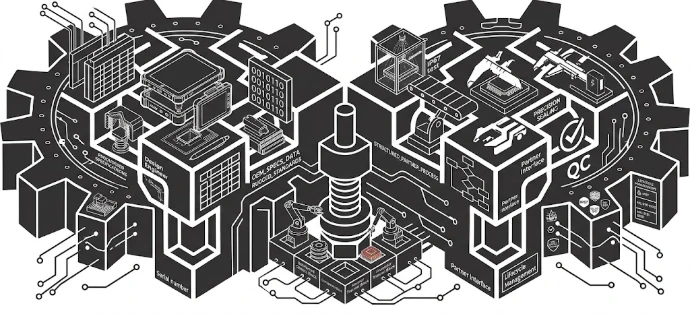
A Structured Partner
When you want a structured custom process with governed scope and clear decision gates, rather than open-ended development.
Low-to-Medium Volume
When the quantity is low to medium, and the usual barriers to a short production run would otherwise rule the project out.
No Finished Spec Yet
When you have a use case and constraints but not a finalised design. Tranquil Studio starts from where you are.
Long-Term Continuity Needed
When the design has to transition into a supported lifecycle, with repeatable delivery over time.
ENGINEERING ROUTES
Rugged computer customisation: Hybrid adaptation or bespoke design
Tranquil Studio assesses each requirement against the existing product range, operating environment and technical specifications to identify the most appropriate engineering route. Hybrid adaptation builds on an existing Tranquil IT platform; bespoke design develops a system around the application’s specific requirements.
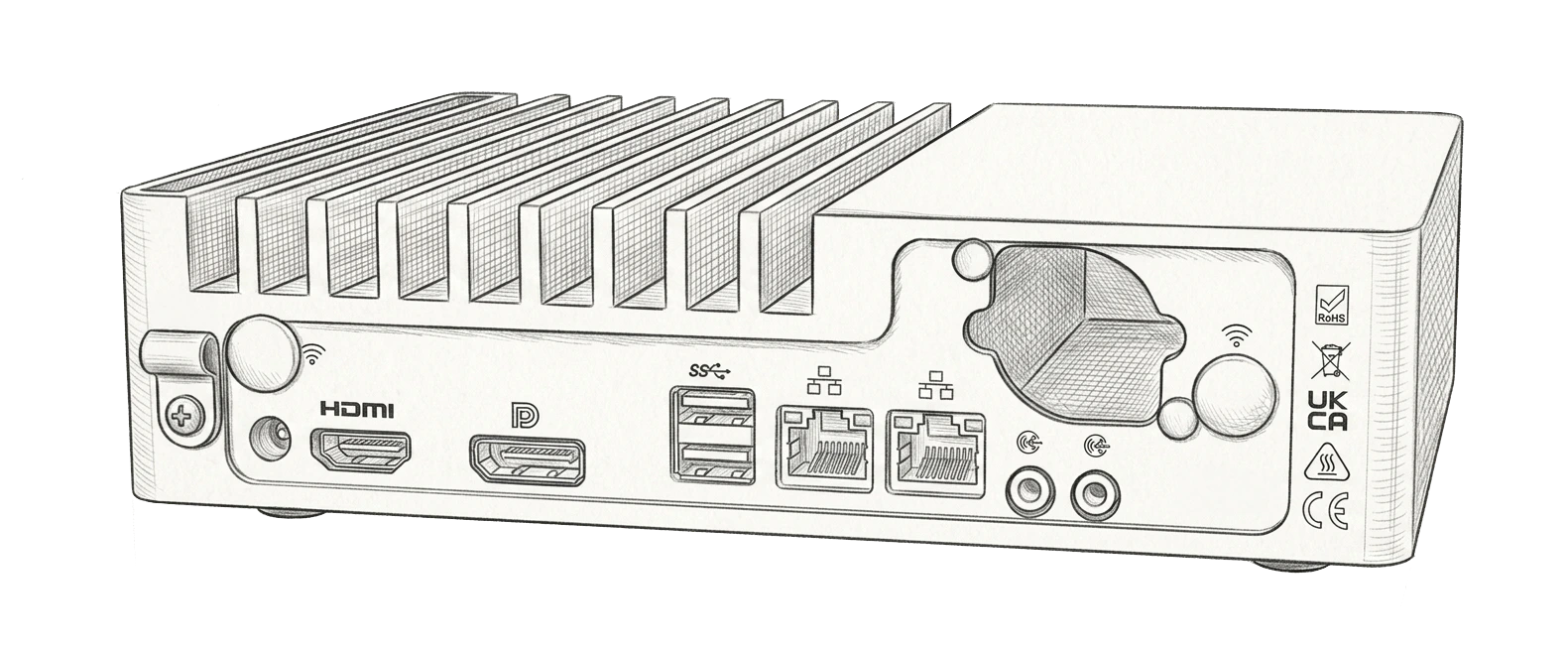
ADAPT AN EXISTING PRODUCT
Hybrid adaptation
Where an existing Tranquil IT platform meets the core computing requirements, Studio can assess modifications to suit the installation. These may include changes to connectors, mounting arrangements, power input or environmental protection, subject to technical feasibility.
Retains the parent product identity
Assigned a separate, controlled reference for the adapted variant
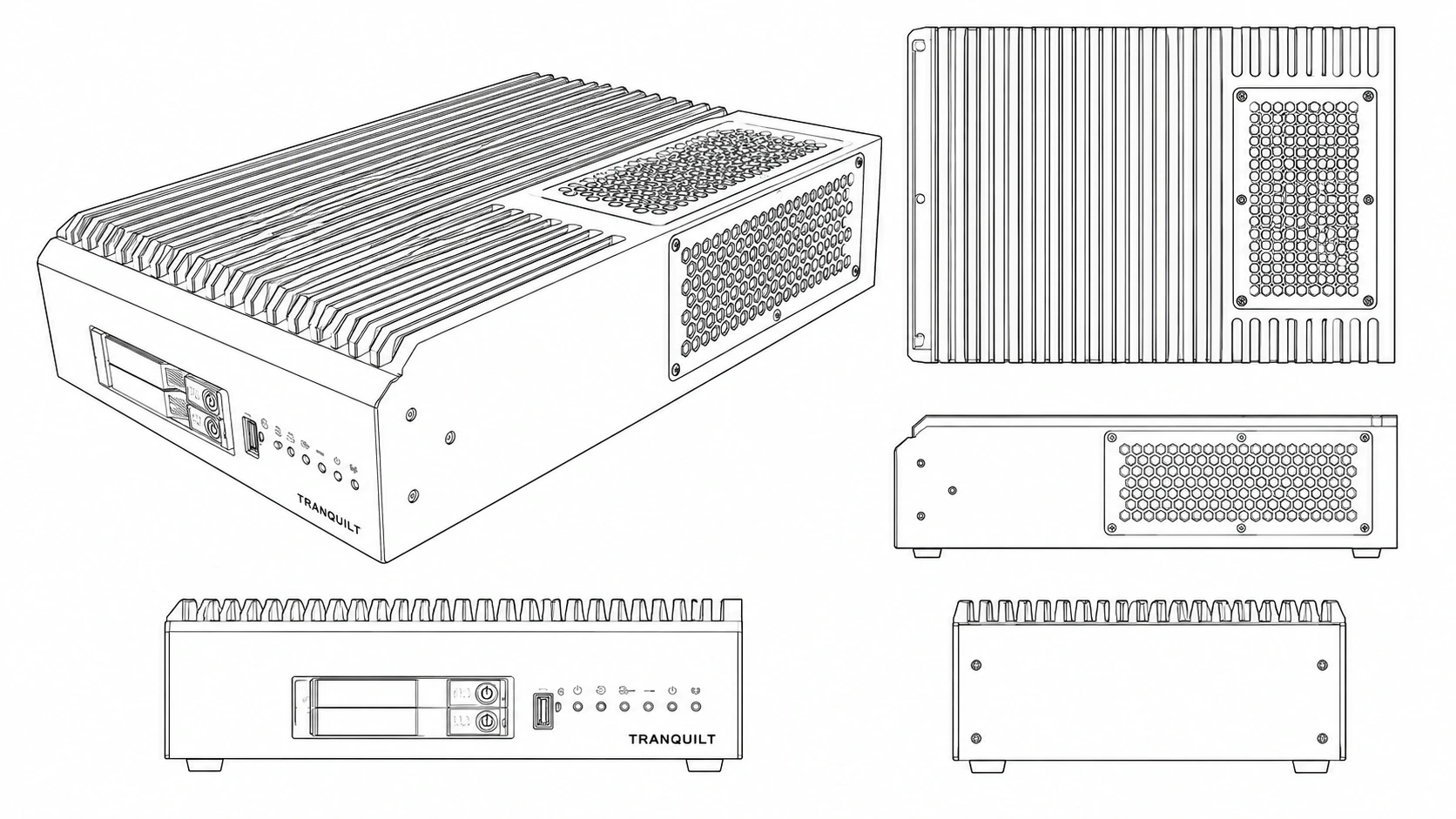 DESIGN A PURPOSE-BUILT SYSTEM
Bespoke design
When no existing platform can meet the requirements, Studio develops a design around the application. Mechanical, thermal and electronic engineering are considered together to address the required performance, interfaces, operating conditions and installation constraints.
Receives its own product reference
Intended for low-to-medium-volume manufacturing programmes
CAPABILITIES
From feasibility assessment to engineered product delivery
Tranquil Studio brings together the capabilities needed to assess, adapt, design, validate and manufacture rugged edge computing systems. Each project draws on the relevant engineering disciplines, with the scope defined by the application’s requirements and the route selected.

DISCOVERY & FEASIBILITY
Establish the requirements before committing to a design.
Define the application, operating environment, performance targets and integration constraints. Early feasibility assessment identifies technical challenges, evaluates potential approaches and helps establish a realistic scope for development.
Requirements definition
Operating environment analysis
Technical feasibility and solution assessment

SYSTEM DESIGN AND ENGINEERING
Develop hardware around the demands of the application.
Where adaptation is insufficient, engineering starts with the system requirements. Mechanical, thermal and electronic design are considered together to address performance, interfaces, installation constraints and operating conditions.
Mechanical and enclosure design
Thermal engineering
Electronics and system design

PRODUCT ADAPTATION
Adapt an existing platform to meet specific installation requirements.
Modify a suitable catalogue product where standard configurations do not fully meet the application’s needs. Depending on feasibility, this can include changes to I/O, connectors, mounting, power input or environmental protection.
Custom I/O and connector integration
Mounting and vehicle integration
Power and environmental modifications

MANUFACTURING AND LIFECYCLE TRANSITION
Prepare the validated design for repeatable production and support.
Translate the approved design into a controlled manufacturing process suited to the programme’s volume and delivery requirements. OEM, ODM and turnkey projects can include a structured handover to Tranquil Services for deployment and lifecycle support.
Production planning and design for manufacture
OEM, ODM and turnkey programmes
Controlled handover into Tranquil Services

PROTOTYPING AND VALIDATION
Evaluate the design before moving into production.
Prototype builds allow the proposed design to be assessed against agreed requirements. Testing, validation and iterative refinement help identify issues and establish whether the system is ready to progress to manufacturing.
Prototype builds
Testing and validation
Design iteration and refinement
PROGRAMMES
OEM, ODM and turnkey edge computer programmes
Tranquil Studio supports projects from product adaptation and custom design through to manufacturing and deployment preparation. Programme scope, production volumes and tooling requirements are defined around the project’s technical needs and commercial objectives.
OEM: Built to your specification
For customers with a defined product specification, Tranquil Studio provides the engineering and manufacturing capability to bring the design into production. The programme follows the customer’s requirements, with scope agreed for development, validation and manufacture.
ODM: Adapted design for your product range
Build on an existing Tranquil Studio design and adapt it to meet the requirements of your product line. This route can reduce the need to develop a system entirely from scratch while allowing for agreed changes to hardware, interfaces and configuration.
Turnkey: From requirements to deployment preparation
A coordinated programme covering the stages required to deliver an edge computing system, from requirements definition and engineering through validation and manufacturing. Tranquil Services can then support software configuration, deployment preparation and lifecycle requirements.
A completed design is the beginning of the system’s operational lifecycle, not the end of the programme. Through a controlled handover to Tranquil Services, adapted and bespoke systems can receive deployment, support and lifecycle management aligned with the agreed service requirements.
Yes. Tranquil Studio by 2CRSi Edge provides custom rugged computer design, hardware adaptation and manufacturing for industrial, embedded and edge computing applications. Projects range from modifications to existing Tranquil IT platforms to bespoke systems developed around specific performance, connectivity, mounting and environmental requirements.
Yes. Tranquil Studio supports OEM programmes based on customer-defined specifications, including agreed hardware requirements, interfaces, mechanical design and operating conditions. Where the specification is still being developed, Tranquil Studio assesses the application and establishes a feasible engineering scope before any design is committed to.
Tranquil Services prepares, configures and supports existing hardware without physically changing the product. Tranquil Studio provides the engineering route when a project requires hardware adaptation or custom design, such as changes to connectors, mounting, power input, thermal management or electronics. The two work together, with Tranquil Services taking on deployment and lifecycle requirements after an agreed engineering handover.
Yes. Hybrid adaptation uses an existing Tranquil IT platform as the starting point for the modifications an application needs. Depending on technical feasibility, changes may include I/O, connectors, mounting arrangements, power input or environmental protection. The adapted unit keeps the name of the product it came from and is given its own controlled variant reference, so it stays supportable alongside the catalogue platform.
OEM vs ODM comes down to who owns the design. In an OEM programme, the customer defines the product requirements and Tranquil Studio undertakes the agreed engineering and manufacturing work. In an ODM programme, an existing Tranquil Studio design provides the starting point for a customer's own product, with agreed adaptations where required. The appropriate model depends on design ownership, development scope and the commercial arrangements for the project.
Yes. Low to medium volume is what Tranquil Studio is built for. 2CRSi Edge works to established manufacturing methods that remove the order minimums and tooling charges which usually stand in the way of a smaller programme. Unit cost and production feasibility are assessed for each project.
Tranquil Studio assesses requirements covering operating temperature, enclosure design, thermal management, mounting, power and environmental protection. The resulting design and any testing it calls for depend on the intended deployment. Applicable ingress protection ratings, environmental limits and compliance requirements are established and validated for the specific configuration.
Prototype development allows a proposed design to be evaluated before a manufacturing programme proceeds. Depending on the project scope, this can include prototype builds, testing against agreed requirements and design refinement. Progression to production rests on the results, technical feasibility and customer approval; a successful prototype does not automatically constitute a production commitment.
Ownership and exclusivity arrangements can be agreed as part of an individual programme. These may cover design ownership, manufacturing rights and any exclusivity requirements. The applicable rights, responsibilities and commercial terms are defined in the project agreement before development begins.
Yes. Tranquil Studio can take on the engineering and manufacturing stages of a project, with an agreed handover to Tranquil Services for deployment preparation and ongoing support. Depending on the programme, that may cover software imaging, configuration, asset tagging, secure build processes and lifecycle management.
Tranquil Services, once a Tranquil Studio design has been formally handed over. Depending on the service scope, support may include warranty options, spare holding, repair, refurbishment and obsolescence management. Support arrangements are defined for the individual programme.
Questions procurement and engineering leads ask
Have a requirement that doesn't fit a standard platform?
Tell us the use case, the operating environment and the constraints not a finished design. We will review feasibility and recommend the lightest approach that meets the requirement, with a clear, governed process from there.